

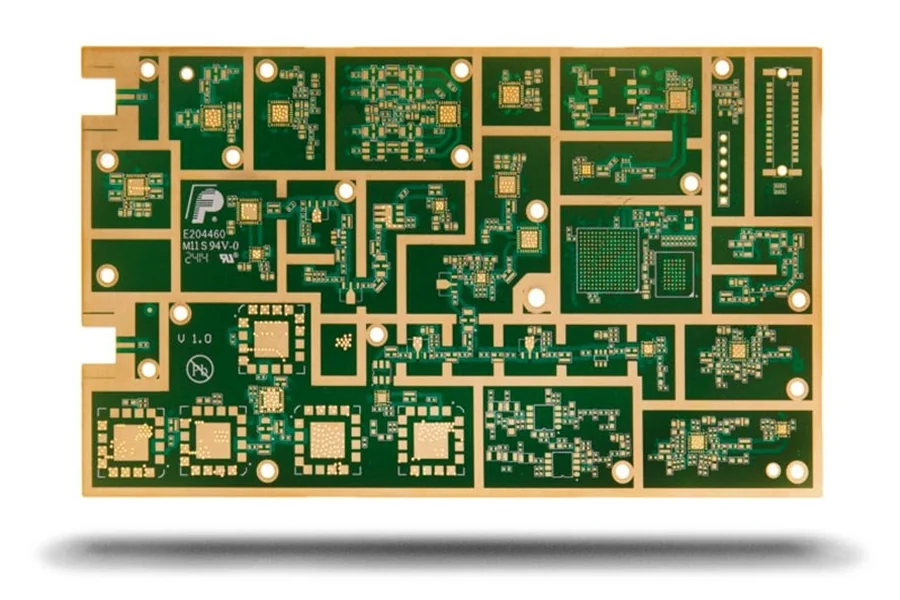
A multilayer printed circuit board is a type of PCB that features three or more conductive copper layers separated by insulating dielectric materials. Unlike single-sided or double-sided boards, multilayer PCBs offer a much higher density of connections, allowing complex circuits to be integrated into compact spaces. These boards have become essential for modern electronics where miniaturization, performance, and reliability are critical. Devices such as smartphones, computers, medical instruments, and communication equipment rely heavily on the advantages offered by multilayer printed circuit boards.
Structure and Composition of Multilayer Printed Circuit Board
The structure of a multilayer printed circuit board is carefully engineered to provide both electrical performance and mechanical stability. Each layer consists of copper foil etched to form circuitry patterns, with insulating materials such as FR4 or polyimide sandwiched between them. Layers are bonded together using heat and pressure through a lamination process, ensuring a single solid board. Vias—either through-hole, blind, or buried—connect the various layers, allowing signals to travel vertically through the board without the need for additional wiring. The precise alignment of layers is crucial for ensuring high signal integrity, especially in applications involving high-frequency data transmission.
Benefits of Using Multilayer Printed Circuit Board
Multilayer printed circuit boards offer several advantages over their single and double-layer counterparts. The most significant benefit is the ability to accommodate more circuitry in less space, enabling more powerful and compact devices. Additionally, multilayer designs enhance electrical performance by reducing crosstalk and electromagnetic interference through better signal routing and dedicated ground planes. These boards also improve durability due to their solid construction, making them resistant to vibrations and mechanical stress. For designers, multilayer printed circuit boards open up possibilities for more sophisticated designs without the size and weight limitations of simpler boards.
Applications of Multilayer Printed Circuit Board
The versatility of multilayer printed circuit boards makes them indispensable across numerous industries. In consumer electronics, they form the backbone of smartphones, tablets, laptops, and gaming consoles. In the automotive industry, multilayer boards support advanced driver-assistance systems, infotainment units, and engine control modules. Aerospace and defense sectors use them for avionics, radar systems, and communication devices due to their high reliability and compact size. Medical equipment such as MRI machines, pacemakers, and diagnostic devices also rely on multilayer printed circuit boards to deliver precise and dependable performance. Industrial automation, networking hardware, and renewable energy systems further highlight the broad scope of their applications.
Design Considerations for Multilayer Printed Circuit Board
Designing a multilayer printed circuit board requires careful attention to electrical, mechanical, and thermal factors. Engineers must optimize layer count to balance functionality and manufacturing cost, as more layers increase complexity. Signal integrity is a key concern, with high-speed circuits needing controlled impedance routing and proper grounding to avoid signal degradation. Thermal management is also critical, especially for high-power applications, and may involve the use of thermal vias or specialized heat-dissipating materials. Additionally, designers must follow strict design-for-manufacturing (DFM) guidelines to ensure the board can be produced efficiently without defects.
Manufacturing Process of Multilayer Printed Circuit Board
The manufacturing of multilayer printed circuit boards involves a sequence of precise steps. The process begins with inner layer imaging and etching to create the circuit patterns, followed by layer alignment and lamination under heat and pressure. Drilling is then performed to create vias, which are plated with copper to establish interlayer connections. The outer layers are imaged and etched, followed by solder mask application to protect the circuitry. Surface finishes such as ENIG (Electroless Nickel Immersion Gold) or HASL (Hot Air Solder Leveling) are applied to enhance solderability and prevent oxidation. Finally, the board undergoes rigorous electrical testing and quality inspection to ensure it meets design specifications.
Choosing the Right Multilayer Printed Circuit Board Solution
Selecting the right multilayer printed circuit board solution depends on the application’s performance requirements, size constraints, and budget. Factors such as the number of layers, choice of base material, type of vias, and surface finish must be carefully evaluated. Working with an experienced multilayer PCB manufacturer ensures that the board will be optimized for performance, durability, and cost-effectiveness. A trusted manufacturer can provide design support, material recommendations, and precision manufacturing processes to meet the unique needs of any project, from consumer electronics to mission-critical aerospace systems.
